Database Management System

1. What is DBMS?

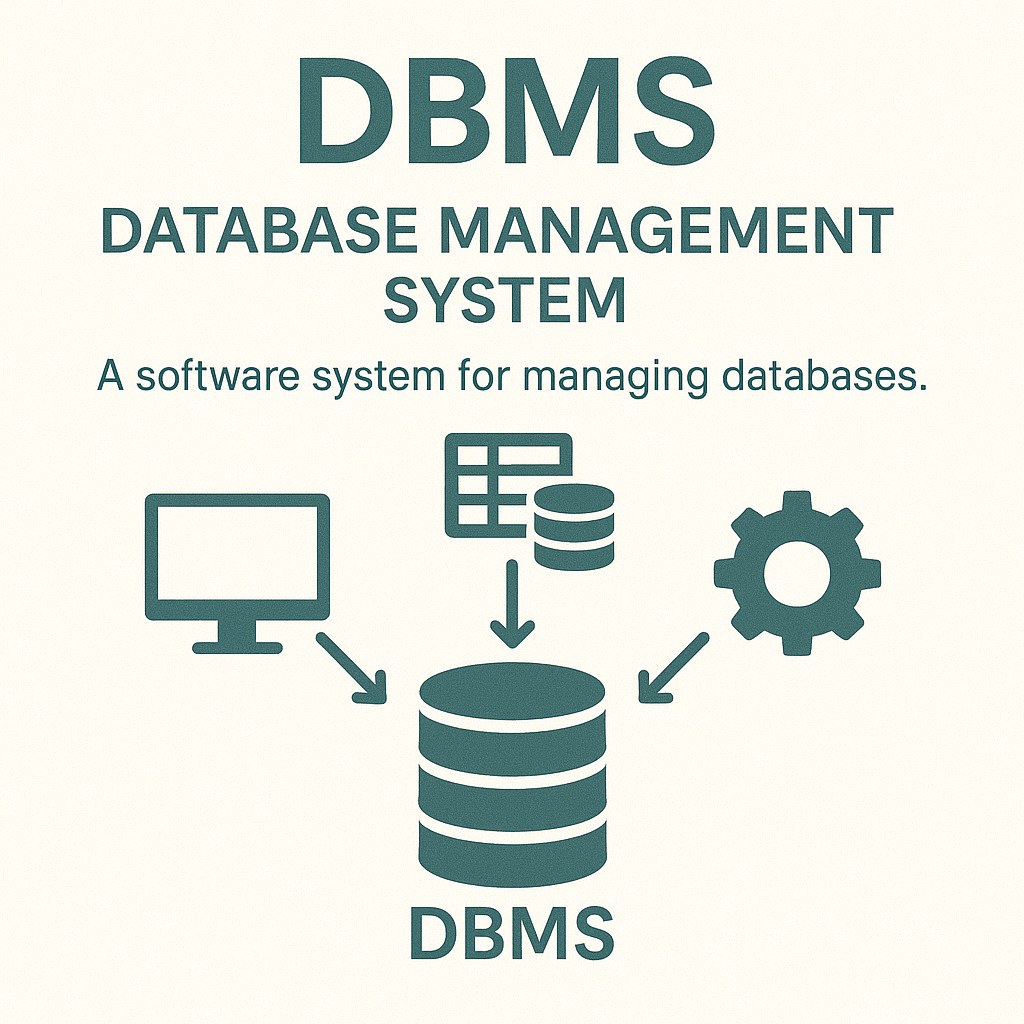
DBMS.png

A Database Management System (DBMS) is software used to store, organize, manage, and retrieve data efficiently.
Examples

  • Oracle
  • My SQL
  • SQL Server
  • MS Access

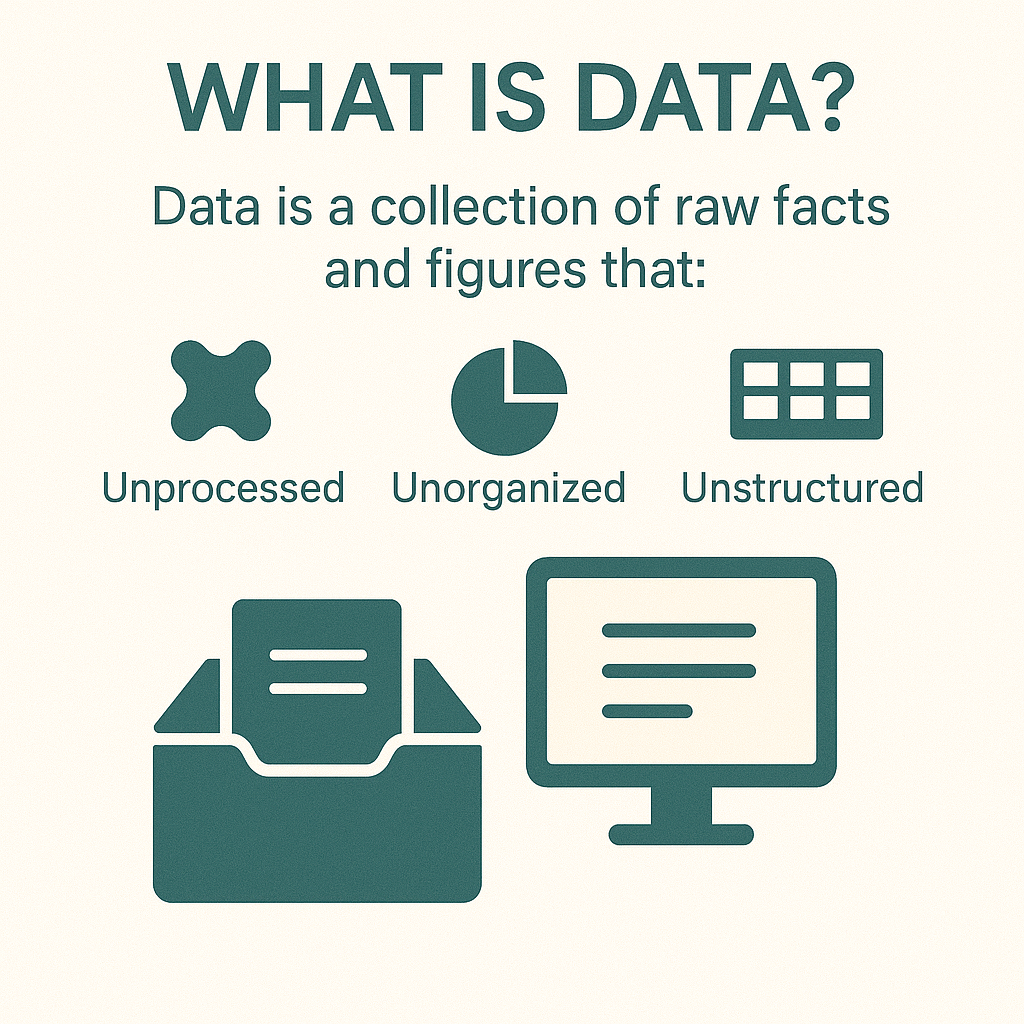
2. What is Data?

what is data.png

Data = Raw facts
Example: Name,Age,Roll No.
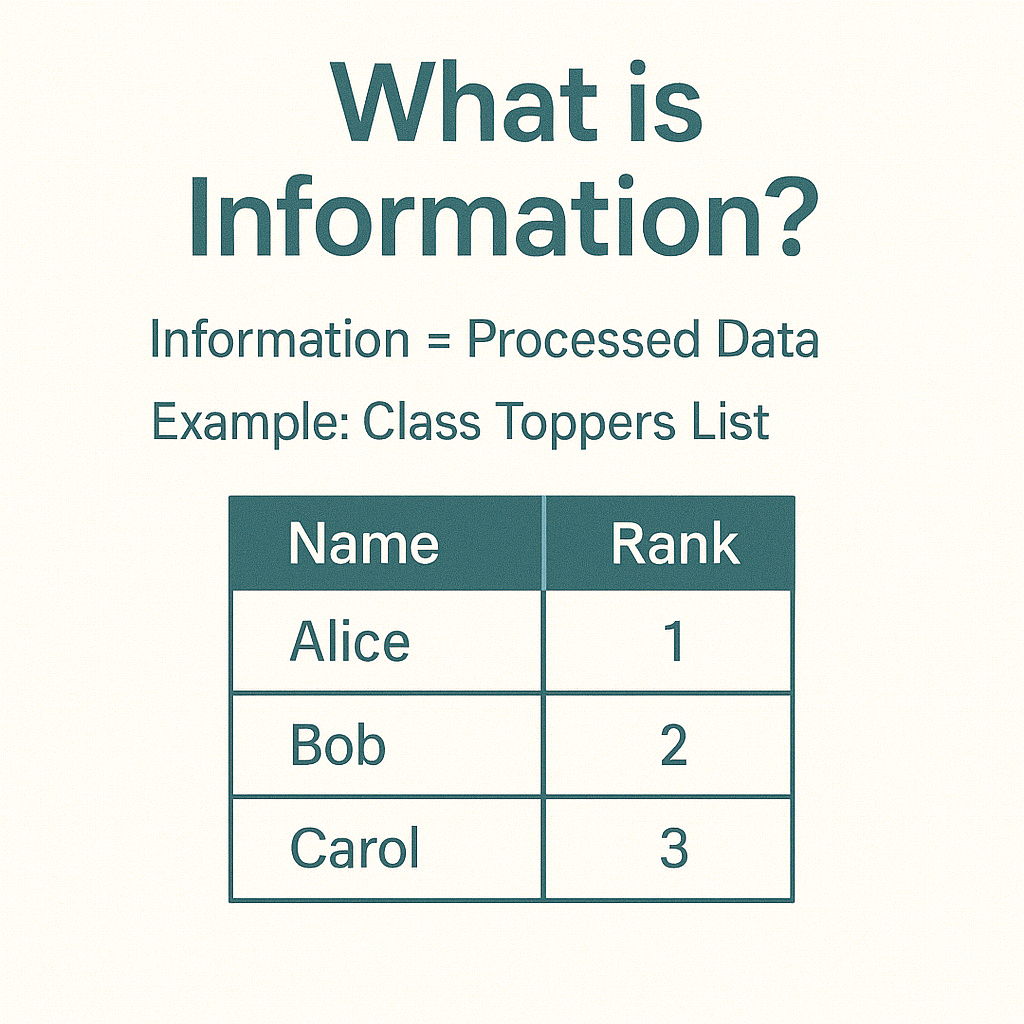

3. What is Information?

what is information.png

Information = Processed Data
Example: Class Toppers List


4. Why DBMS (Advantages)

Why DBMS(Advantages).png
  • Removes data duplication
  • Data becomes secure
  • Easy to retrieve data
  • Multi-user access
  • Backup and recovery available
  • Data consistency

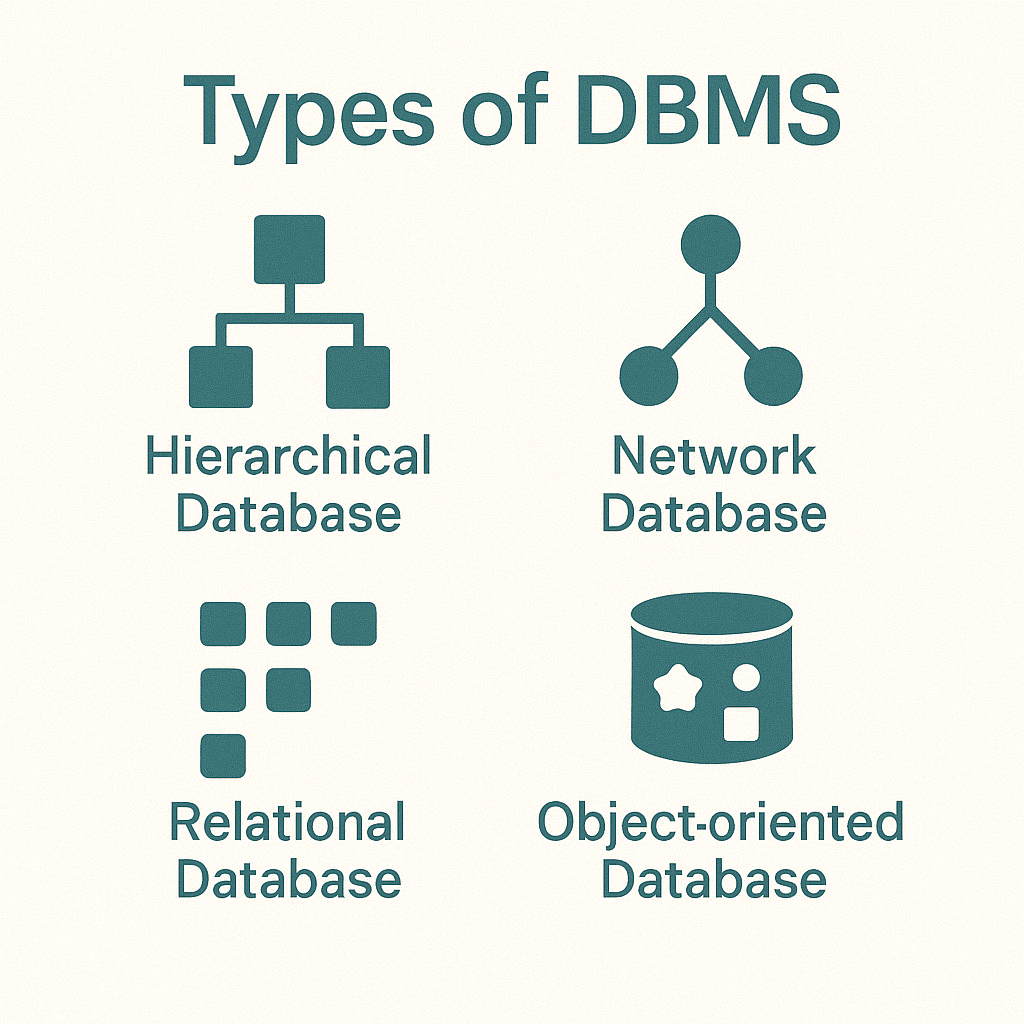
5. Types of DBMS

types of dbms.png
1. Hierarchical DBMS
  • Tree - like structure
2. Network DBMS
  • Many-to-many relations
3. Relational DBMS (RDBMS)
  • Tables in rows & columns
  • MOST IMPORTANT
4. Object-Oriented DBMS
  • Stores objects

RDBMS is most commonly used


6. What is RDBMS?

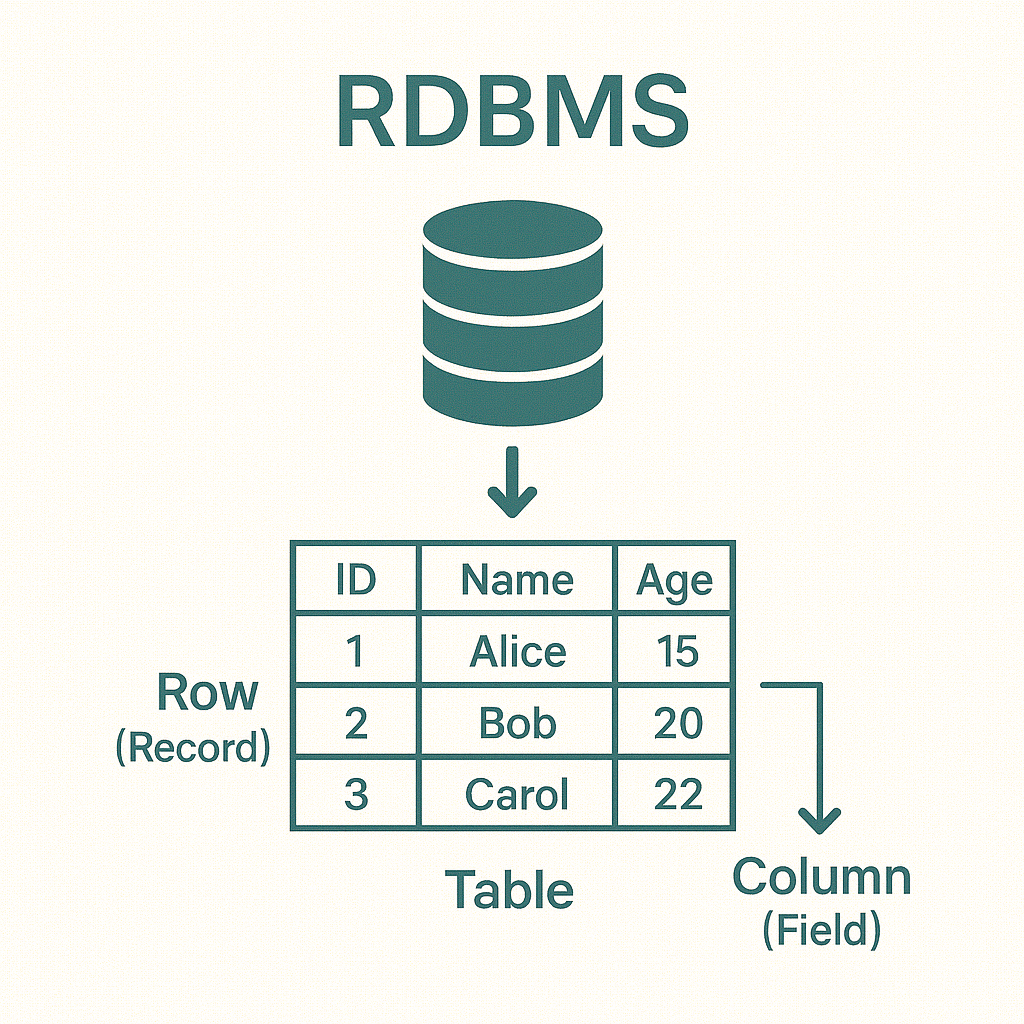
rdbms.png

RDBMS = Relational Database Management System
Data stored in table (rows & columns).
Examples

  • My SQL
  • Oracle
  • PostgreSQL
  • SQL Server

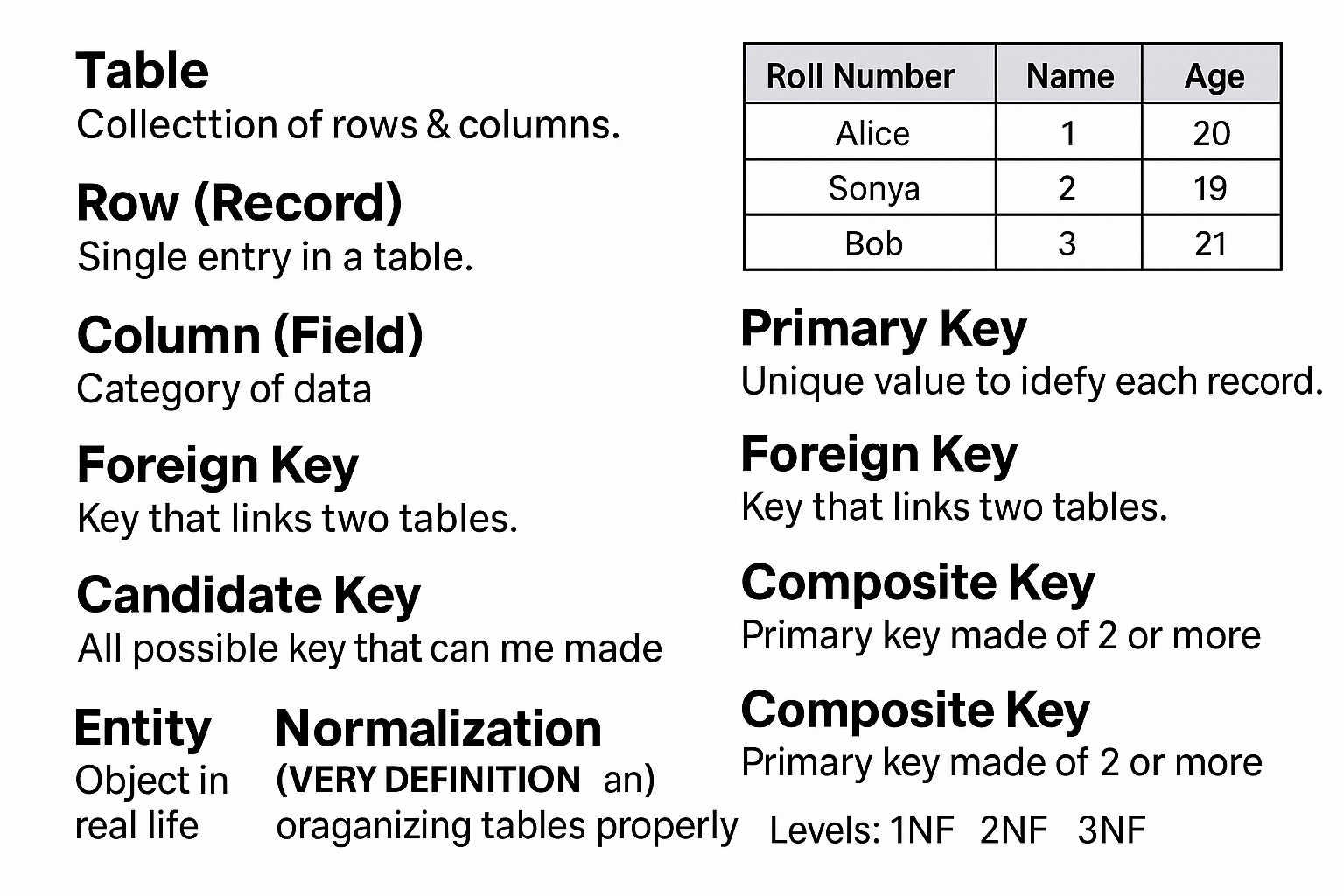
7. Important Terms (VERY IMPORTANT)

important terms.png
Table
Collection of rows & columns.
Row (Record)
Single entry in a table.
Column(Field)
Category of data (Name, Age).
Primary Key
Unique value to identify each record.
Example: Roll Number.
Foreign Key
Key that links two tables.
Candidate Key
All possible keys that can be made primary key.
Composite Key
Primary key made of 2 or more columns.
Entity
Object in real life(Student, Employee).
Attribute
Property of an entity(Name, Age, Salary)

8. Normalization (Easy Definition)

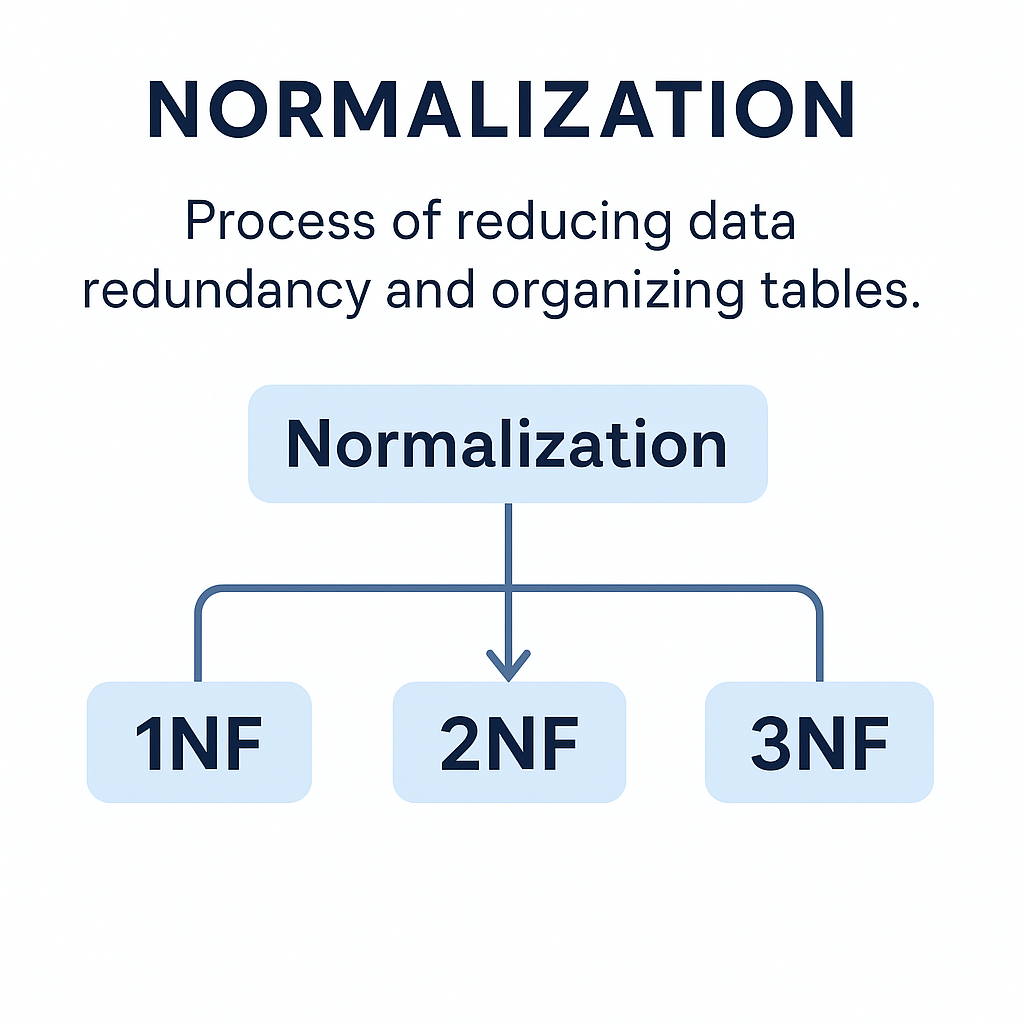
normalization.png

Normalization = Removing data duplication and oraganizing tables properly.

Levels:

  • 1NF
  • 2NF
  • 3NF

(Just remember names - enough for JOA-IT.)
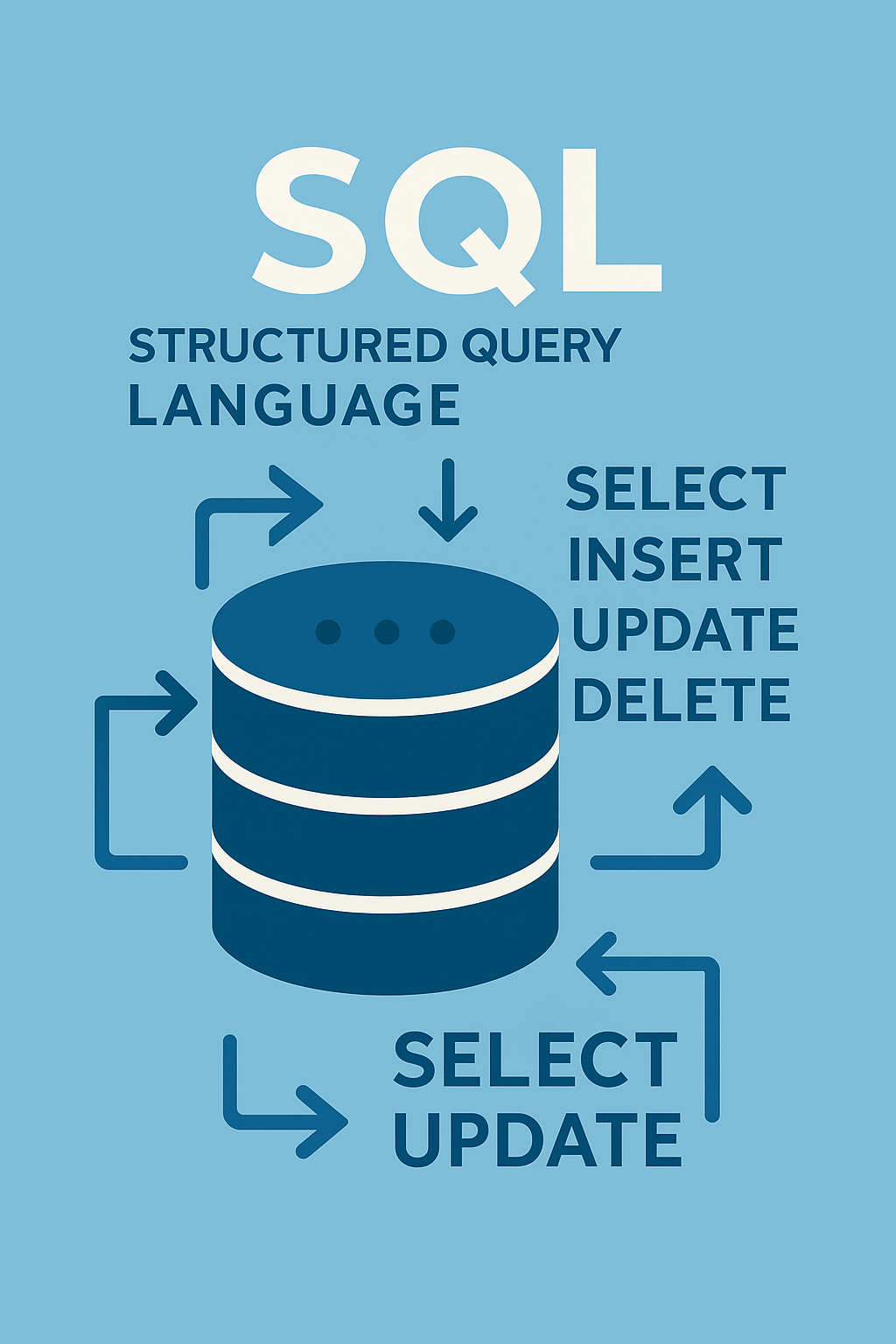

9. SQL(Structured Query Language)

sql.png

SQL = Language to interact with database.
Most important commands:

1. DDL (Data Definition Language)
  • CREATE
  • DROP
  • ALTER
  • TRUNCATE

2. DML (Data Manipulation Language)
  • INSERT
  • UPDATE
  • DELETE

3. DQL (Data Query Language)
  • SELECT

4. DCL (Data Query Language)
  • GRANT
  • REVOKE

5. TCL (Transaction Control Language)
  • COMMIT
  • ROLLBACK

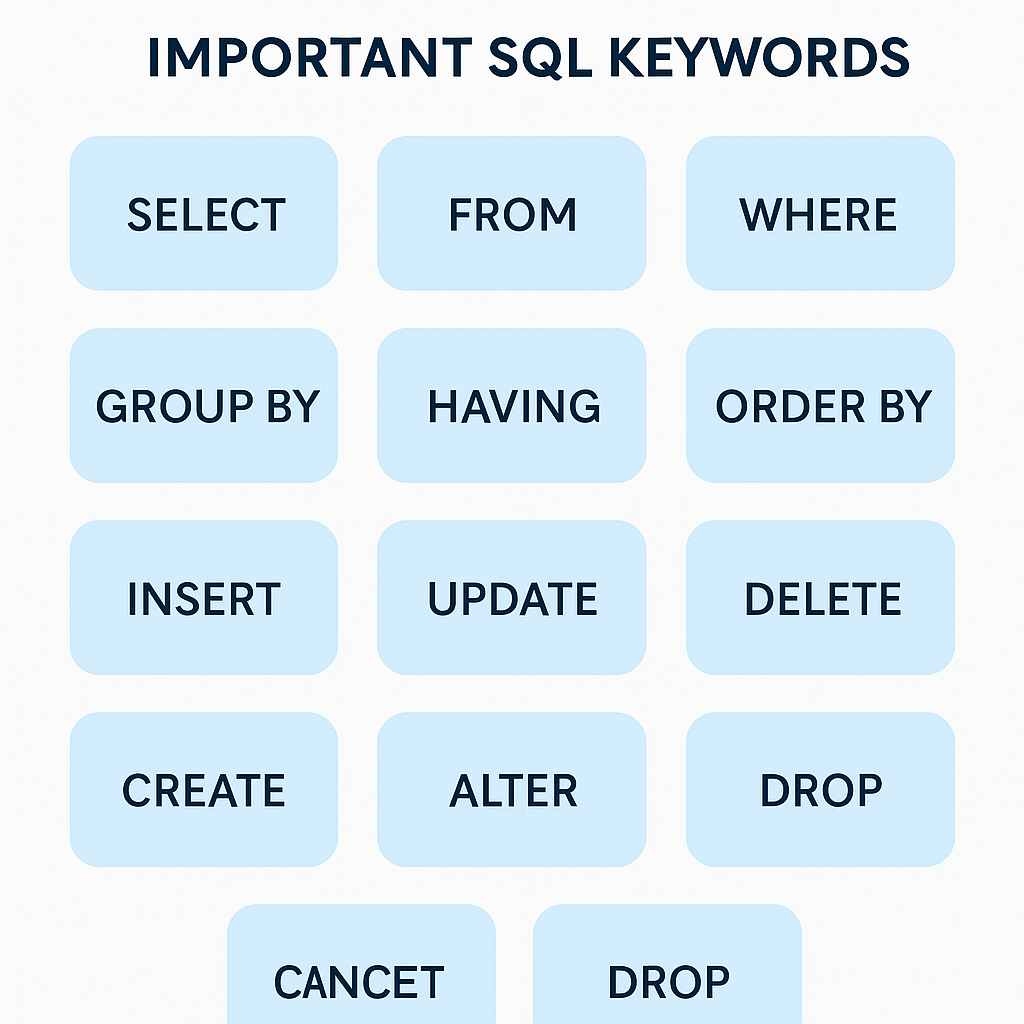
10. Important SQL Keywords

imprtant sql keywords.png
  • SELECT
  • FROM
  • WHERE
  • AND / OR
  • ORDER BY
  • GROUP BY
  • DISTINCT

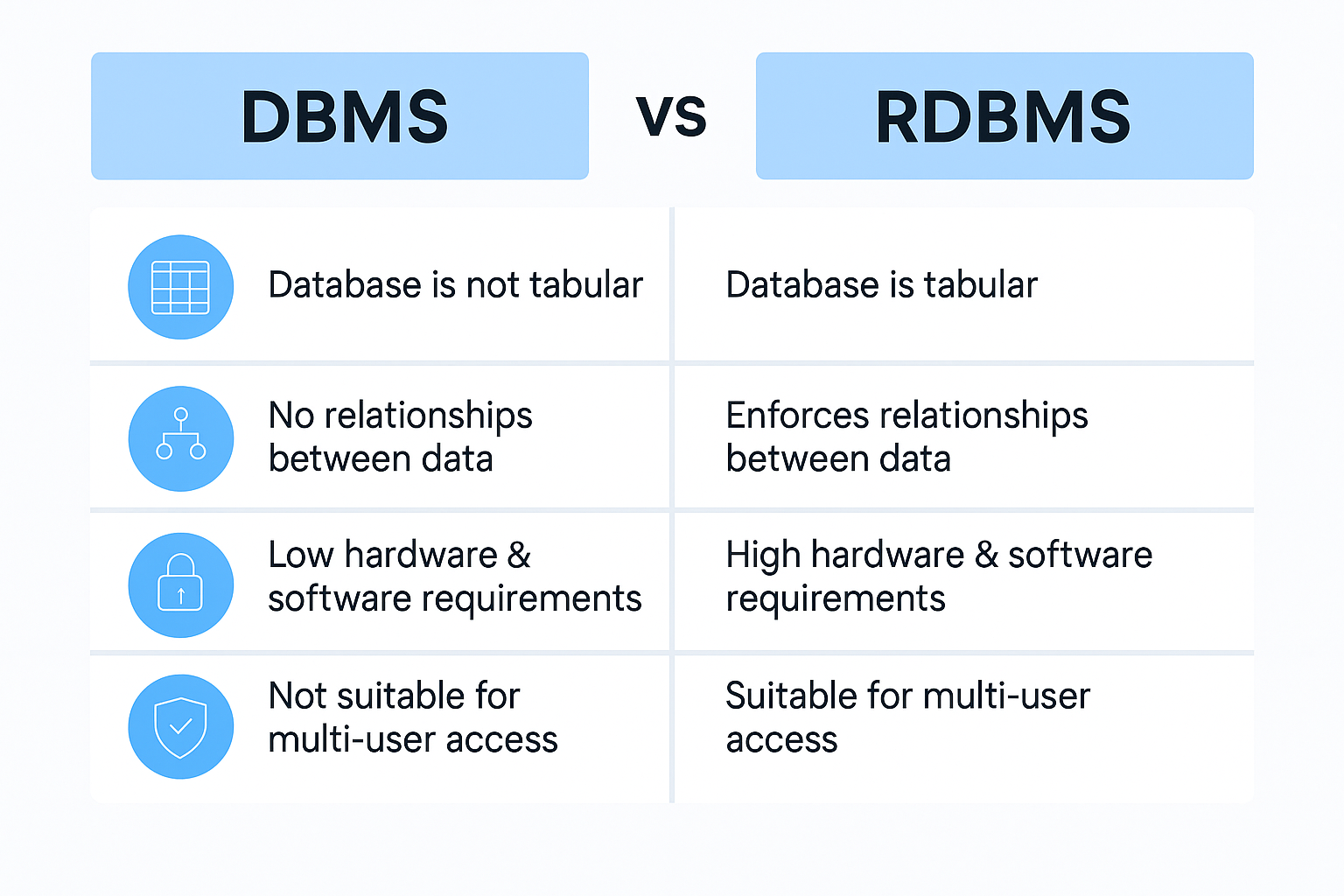
11. DBMS vs RDBMS (Exam Question)

DBMS VS RDBMS.png
DBMS RDBMS
Data in files Data in tables
No relations Relations exist
Low security High Security
Single User Multi-user
Slower Faster

12. Examples (Exam)

✓ DBMS Example → File System

✓ RDBMS Example → My SQL, Oracle
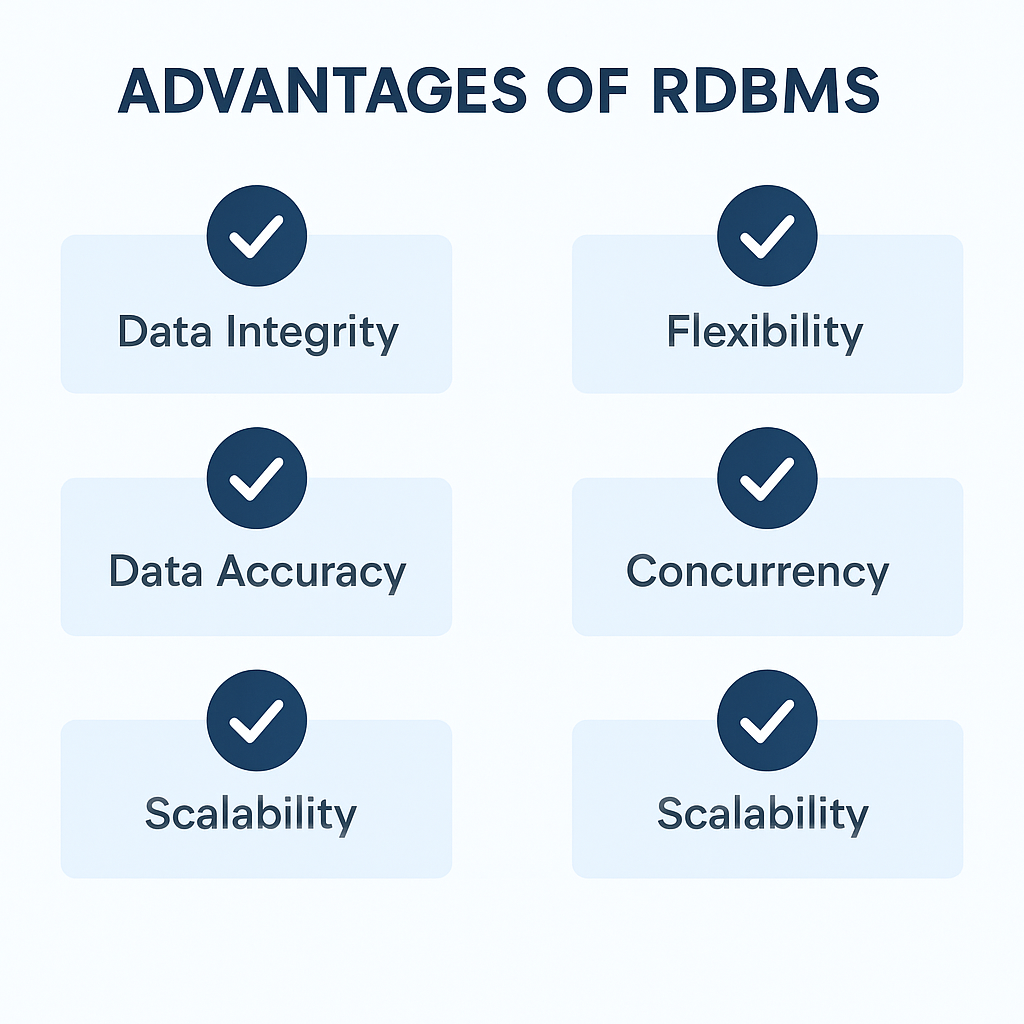

13. Advantages of RDBMS

advantages of rdbms.png
  • Fast searching
  • Relationships between tables
  • High Security
  • Easy SQL queries
  • Multi-user support

14. Keys asked in Exam

  • Primary Key
  • Foreign Key
  • Candidate Key
  • Composite Key

15. Most Important 1-line Questions

  1. DBMS Stands for → Database Management System
  2. RDBMS stands for → Relational Database Management System
  3. SQL stands for → Structured Query Language
  4. Primary Key → Unique value
  5. Foreign key → Links Tables
  6. Table consists of → Rows & Columns
  7. Command to view data → SELECT
  8. Command to delete data → DELETE
  9. Command to create table → CREATE
  10. Example of RDBMS → My SQL